
Controlling Health Plan Costs Requires More than Cost Containment
June 22, 2026Healthcare costs continue to rise despite years of cost containment efforts. Employers have added to their health plans various programs, vendors, and point solutions to reduce spend and improve outcomes. Yet trend continues to climb.
The challenge is understanding that cost containment and cost control are not the same.
Cost containment focuses on reducing spend in specific areas. Cost control focuses on improving the performance of the health plan as a whole.
The Visibility Gap Costing Employers Millions
Effective cost control means having a wholistic view over the entire health plan performance. Most healthcare investments though are still measured in isolation.
Vendors define success differently, report results separately and focus on their own area of the ecosystem. That makes it difficult for the employer to understand what is improving or decreasing plan performance.
The real question is not whether a program increased engagement. It is whether it changed utilization patterns, improved outcomes, and reduced long-term financial risk.
Equally important, employers need the ability to identify issues that may never surface through standard reporting.
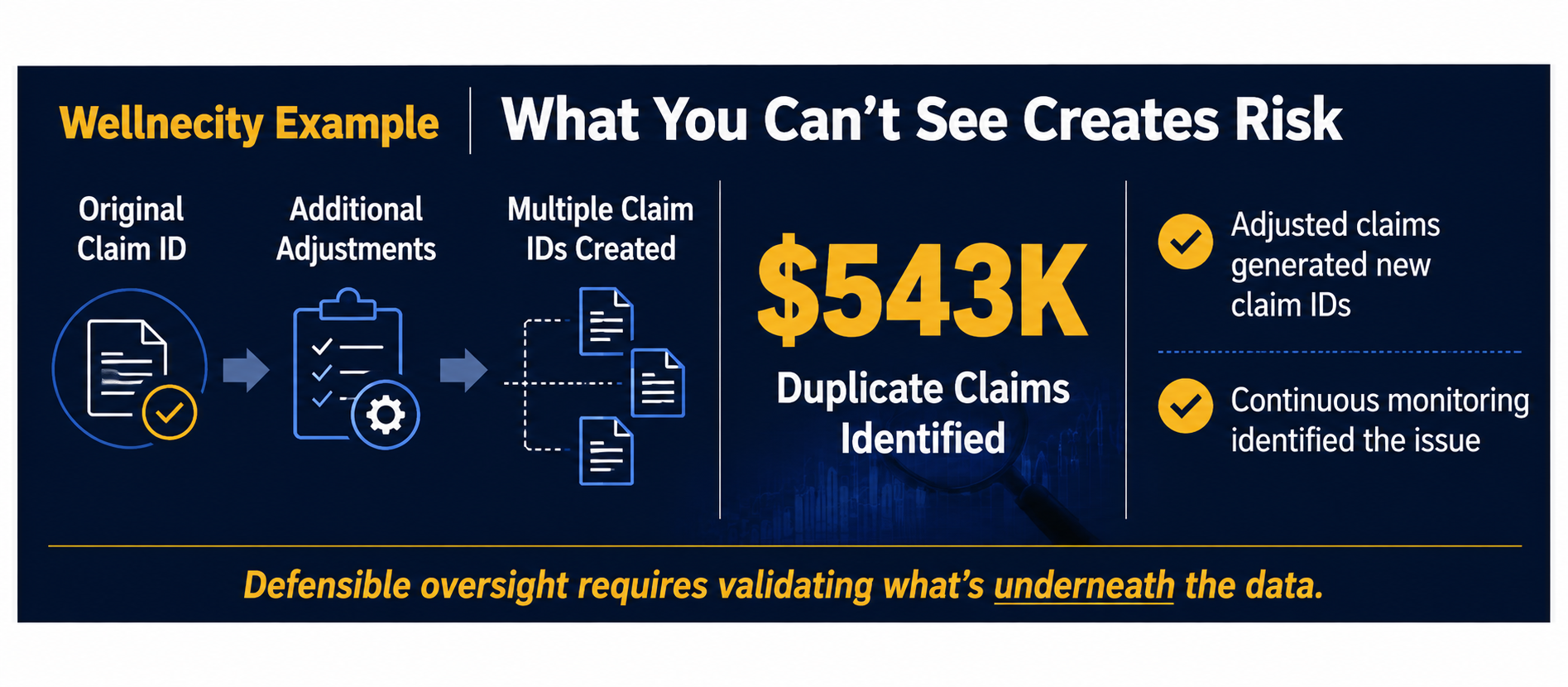
Case in point: For one employer using a large national TPA, ongoing monitoring identified over $540,000 in duplicate claims that had been incorrectly billed due to the way adjusted claims were processed. By reconnecting adjusted claims to their original records, the issue was identified, escalated, and corrected.
For Cost Control, Oversight Is A Must
Control starts with visibility.
Employers gaining more control over healthcare spend can:
- Identify emerging cost drivers earlier
- Evaluate vendor performance consistently
- Adjust strategy before costs escalate
They treat healthcare less like a collection of vendor relationships and more like an operational discipline.
Executive leadership increasingly expects healthcare spending to be managed like any other major business investment.
Leadership wants to know:
- What is driving costs
- Which strategies are working
- Whether investments are improving overall plan performance
Organizations that consistently outperform trend don't rely on cost containment alone. They create visibility, establish accountability, and continuously monitor performance throughout the year.
Cost containment is a tactic. Cost control is a management discipline.
And it starts with visibility.
Get Insights Delivered to Your Inbox
Practical strategies for self-funded health plan management, delivered regularly.
Subscribe to Insights