C-suite leaders see the potential of self-funded health plans, but only having raw data stands in the way. While data is critical for unlocking value and demonstrating true ROI — without actionable insights, data can actually hinder decision-making.
When your team tells you "We have 543 diabetics" — you now have more questions:
- Is that average, more, or fewer than what we should have?
- Can we help them cost-effectively?
- What is the payback for solutions on the market?
- How many of our diabetics will actually sign up?
- How does a diabetic solution compare to other initiatives we're looking at?
It can make you wonder why everyone is running around saying "get your data," if data leads to more questions than answers. And this, my friends, is the difference between observations and insights.
Insights Unlock Potential in Your Health Plan Value
- Prioritize initiatives based on value
Insight would tell you that despite remarkable spending on marketing for diabetes programs, few have real impact — so you'd be better off focusing on polychronic members (many of whom have diabetes, along with 4+ other conditions). - Inform members about the benefits you offer — when they need them
Wellnecity helped a client guide high-risk members to better care through a Center of Excellence, increasing utilization from 5% to 45% and saving the employer $2 million in healthcare spend. - Reduce complexity to increase effectiveness
Wellnecity streamlined health plan management for a client by integrating all solution data into Smart Hub, finding improvement opportunities that saved them $18 million (13% of their plan costs). - Uncover the real ROI and rationalize underperforming vendors
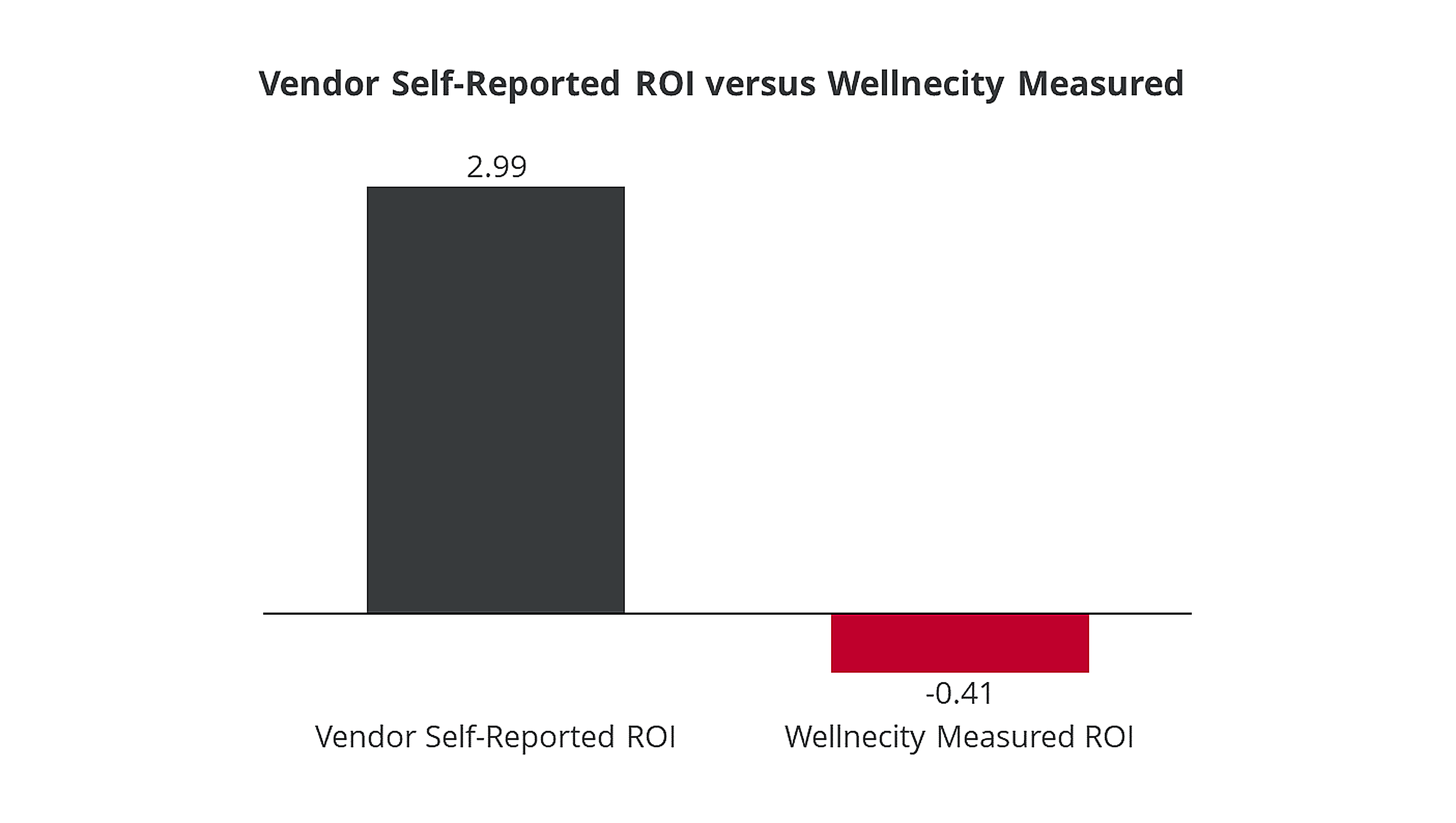
Conduct a deep performance assessment of your vendors. Quantify spend, utilization and impact on employee health outcomes, with unbiased third-party validation. You can bet your realized ROI is less than the vendors' self-reported values — how much less is it? - Understand and communicate impact
Don't get lost in data. Translate findings into clear priorities, highlighting programs driving positive results and areas ripe for improvement. By showing management you have complete control, the annual "trend is high" discussion can become a thing of the past.
Don't just optimize your plan design. Optimize how it operates.
Get Insights Delivered to Your Inbox
Practical strategies for self-funded health plan management, delivered regularly.
Subscribe to Insights