
Unlocking Value: How PE Firms Can Take Charge of Healthcare Costs
July 29, 2024Imagine boosting your portfolio's value by 10% simply by rethinking your approach to health plans. For private equity (PE) firms, the towering and often neglected challenge of unmanaged healthcare expenses is eroding profit and creating headwinds for value creation.
Relegating health plans to an afterthought is not an option. By strategically managing these costs, PE firms can transform what has traditionally been a drain on resources into significant EBIT gains.
Break the Costly Health Benefit Annual Trend Cycle
Employee healthcare is typically the second largest fixed expense, trailing only labor costs. Health benefits cost most businesses roughly $13,000 per employee (or $13M per 1,000 employees) — up 55% over the past 10 years for family coverage. The average 6–10% annual trend increase for a mid-sized employer represents a $1.5M to $2.5M annual EBIT hit for every 1,000 employees. That translates into the lion's share of a company's sales growth being absorbed just to pay for increased healthcare expenses.
Benefits of Prioritizing Healthcare in Private Equity Portfolios
- Make Decisions Based on Data
By integrating and continuously analyzing health plan data in one central hub, you can measure all aspects of a company's health plan performance and identify opportunities and issues that otherwise go unnoticed. This ROI-focused approach can reveal cost-saving opportunities and help you prioritize the improvements that will have the greatest impact. - Hold Vendors Accountable
The role of vendor accountability cannot be understated. Demand transparency and tangible value from health plan vendors to ensure their performance aligns with expectations and positively impacts the bottom lines of your portfolio companies. - Address Health Plan Members Most in Need
A small percentage of plan members account for up to 80% of spend. By leveraging predictive analytics to pinpoint these individuals, you can significantly reduce healthcare costs and improve health outcomes.
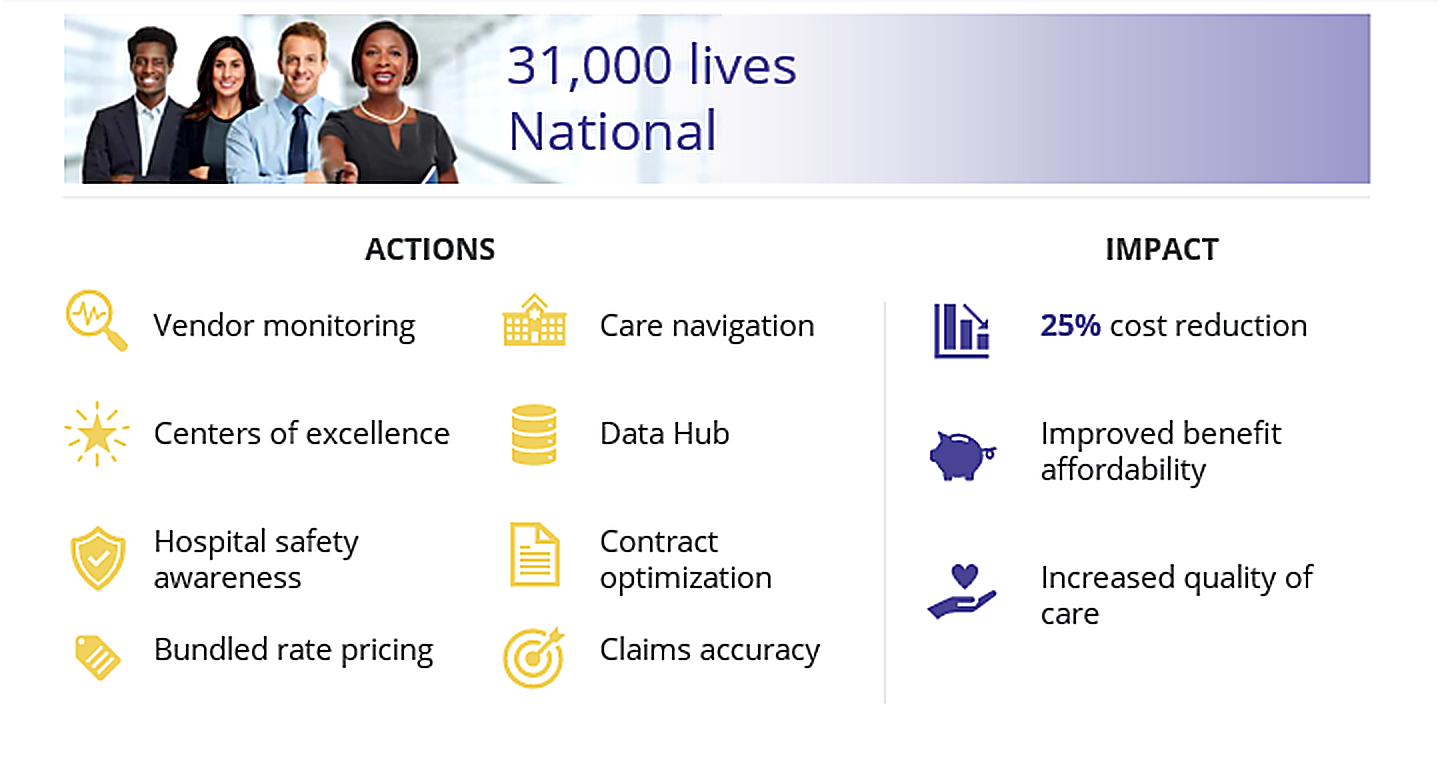
In one example, a company reduced cost by 25% and provided better benefits and health outcomes — without cost-shifting to members. The value impact to the PE firm from the company's sale was over $100M.
Get Insights Delivered to Your Inbox
Practical strategies for self-funded health plan management, delivered regularly.
Subscribe to Insights